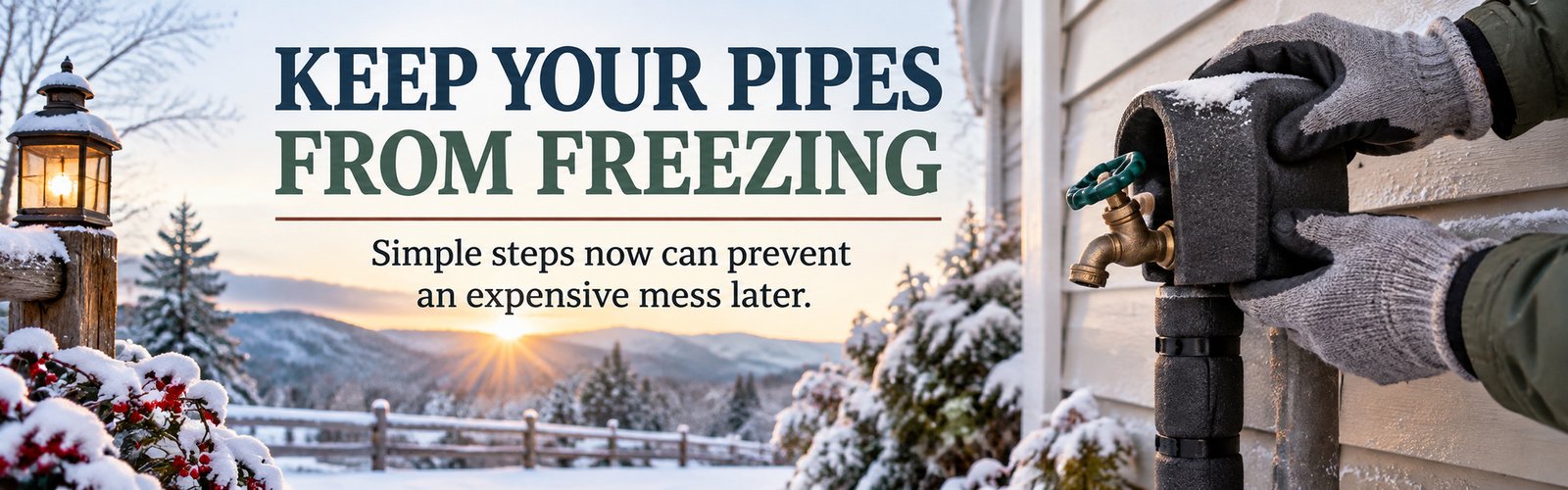
A frozen water pipe can turn a cold winter day into an expensive mess.
When water freezes, it expands. The pressure that builds inside a pipe can cause the pipe or a fitting to split. Sometimes you don’t even know there’s damage until the pipe begins to thaw—and suddenly there’s water everywhere.
Fortunately, many frozen pipes can be prevented with a few inexpensive precautions.
And if a pipe does freeze, knowing what to do before you reach for a torch or space heater can prevent an even bigger problem.
Which Pipes Are Most Likely to Freeze?
Not every pipe in the house has the same risk.
Pay particular attention to water lines located:
- In crawl spaces
- In unheated basements
- In garages
- Along exterior walls
- Under kitchen and bathroom sinks on outside walls
- Near foundation vents or other openings
- In poorly insulated areas
- Leading to outdoor faucets
If you’ve had a pipe freeze before, that’s an especially good place to start. Unless something has changed, it may freeze again.
1. Disconnect the Garden Hose
This may be the easiest preventive job of all.
Before freezing weather arrives, disconnect garden hoses from outdoor faucets.
Leaving a hose connected can trap water and contribute to freezing in the faucet or pipe.
Drain the hose and put it away if you can. If your outdoor faucet has a separate indoor shutoff valve, follow the proper procedure for shutting off and draining that line.
An inexpensive insulated outdoor faucet cover can provide some additional protection.
2. Insulate Exposed Pipes
Pipe insulation is relatively inexpensive and can be installed around vulnerable pipes in crawl spaces, garages, basements, and other cold areas.
Foam pipe sleeves are especially simple to use. They’re usually slit along one side so they can fit around an existing pipe.
Pay attention to elbows and other areas where gaps in the insulation might leave sections exposed.
You don’t necessarily have to insulate every pipe in the house. Start with the pipes in the coldest areas.
3. Stop Cold Air From Blowing Onto Pipes
Sometimes the problem isn’t simply the temperature. It’s a stream of freezing air hitting the pipe.
Look for gaps or openings around:
- Foundations
- Crawl-space access doors
- Plumbing penetrations
- Windows
- Exterior doors
A small opening can direct very cold air onto one particular section of plumbing.
Seal appropriate gaps where you can, but don’t block vents or openings that are required for ventilation, combustion equipment, or other safety purposes.
4. Open Cabinet Doors During Very Cold Weather
If plumbing is located inside a cabinet against an exterior wall, opening the cabinet doors can allow warmer room air to circulate around the pipes.
This is especially helpful under kitchen and bathroom sinks.
Just remember that opening the cabinet may expose household cleaners, medicines, or other dangerous products to children or pets. Move those items somewhere safe first if necessary.
5. Let a Faucet Drip When Necessary
During unusually cold weather, allowing a small amount of water to move through a vulnerable line can sometimes help reduce the chance of freezing.
You don’t need the faucet running full blast.
If you know which faucet is supplied by the pipe that tends to freeze, that’s the one to concentrate on.
Yes, you’ll use a little extra water.
That’s still considerably cheaper than repairing a burst pipe and water damage.
6. Don’t Turn the Heat Down Too Far
Trying to save money on heating can become expensive if the house gets cold enough for plumbing to freeze.
This is particularly important if you’re leaving home during freezing weather.
Keep enough heat in the house to protect the plumbing, and remember that areas inside walls, crawl spaces, cabinets, and garages may be considerably colder than the thermostat indicates.
Know Where Your Main Water Shutoff Is
Do this before you have an emergency. It’s part of getting your house ready for winter.
Find the main water shutoff valve for your home and make sure you know how to operate it.
If a frozen pipe bursts, being able to stop the water quickly can mean the difference between a relatively small repair and major damage.
Everyone in the household who is able should know where that valve is.
If you aren’t sure where yours is, now is the time to find out—not while water is running across the floor.
What If a Pipe Is Already Frozen?
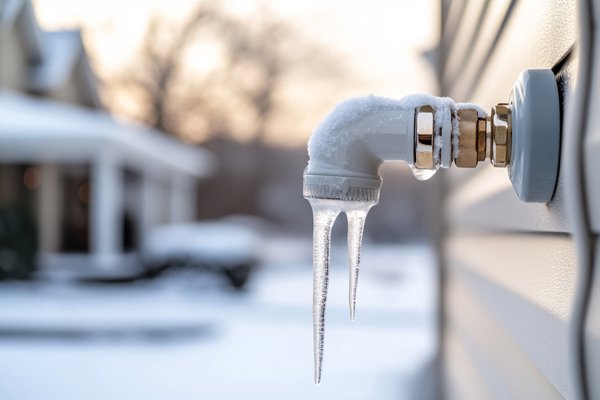
One of the first signs may be turning on a faucet and getting only a trickle—or no water at all—during freezing weather.
Don’t automatically assume the pipe has burst.
But do take it seriously.
First, Check for Leaks
Look around the accessible plumbing for:
- Cracks
- Bulges
- Split fittings
- Water on the floor
- Wet walls or ceilings
- Unusual dripping or running-water sounds
Remember that a frozen pipe may already be damaged even though it isn’t leaking yet. The ice can temporarily hold the water back.
The leak may appear when the pipe thaws.
That’s why it’s important to know where the main shutoff is and keep an eye on the area while thawing.
Open the Faucet
If you know which pipe is frozen, open the affected faucet.
As the ice begins to melt, having the faucet open allows water to begin moving through the line.
Thaw the Pipe Slowly
If the frozen section is accessible and there is no obvious damage, gentle heat can be used to warm it gradually.
Possible methods include warm towels, a hair dryer, or another safe source of gentle heat intended for the situation.
Work gradually rather than trying to heat one small spot extremely quickly.
Never Use an Open Flame
Don’t use a propane torch, blowtorch, candle, or other open flame to thaw a frozen pipe.
You’re dealing with plumbing that may be near wood framing, insulation, wiring, or other combustible material.
Turning a frozen pipe into a house fire is definitely not an improvement.
If You Can’t Find the Frozen Section
The frozen area may be hidden inside a wall, ceiling, floor, or another inaccessible location.
At that point, don’t start tearing into the house blindly.
If you can’t safely locate or thaw the pipe—or if you suspect the pipe has already burst—it’s time to call a plumber.
A Little Preparation Can Prevent a Big Repair
Mountain Heart Ministries
Hope for Today • Help for Tomorrow • Faith for the Journey
Helping our Appalachian neighbors one life, one family,
and one community at a time.
Contact
info@mountainheartministries.org
Serving mountain communities in Eastern Kentucky
and Northeast Tennessee.
“My little children, let us not love in word, neither in tongue;
but in deed and in truth.”
1 John 3:18 (KJV)
© 2026 Mountain Heart Ministries. All Rights Reserved.
Mountain Heart Ministries is a Christian nonprofit organization
dedicated to serving individuals and families with compassion,
dignity, and hope.