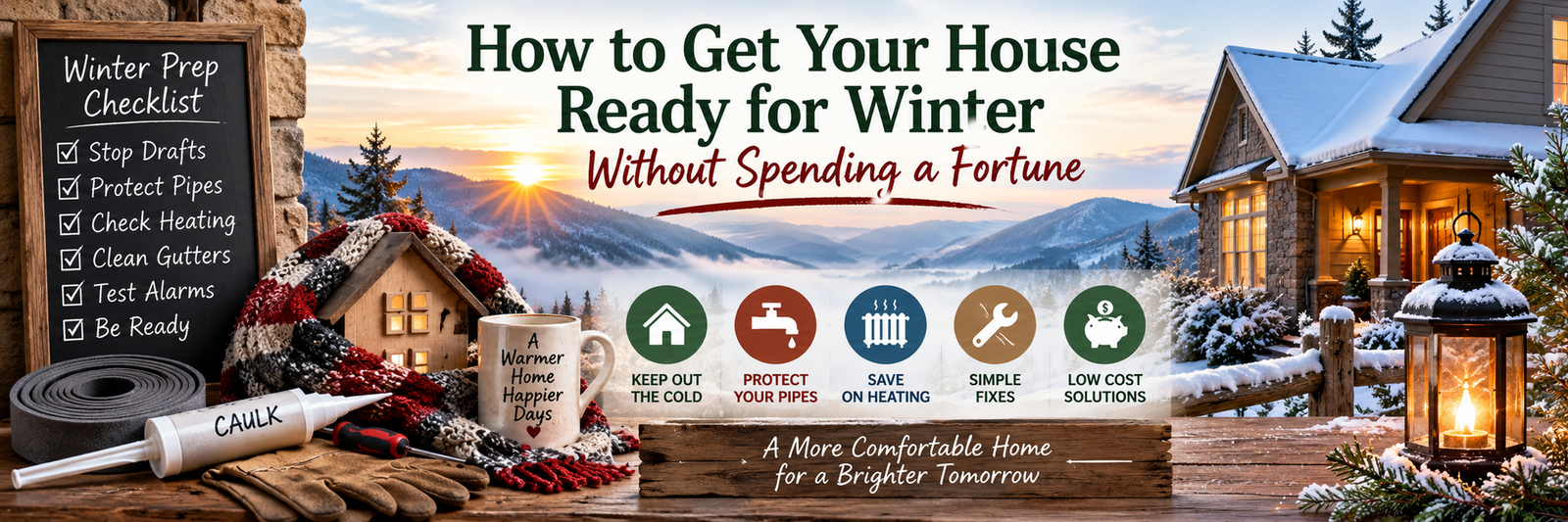
Getting a house ready for winter doesn’t have to mean buying new windows, adding thousands of dollars’ worth of insulation, or replacing the heating system.
Sometimes the little things make a surprising difference.
A cold draft under a door, an uncovered outdoor faucet, a dirty furnace filter, or a forgotten gap around a pipe may not seem important in September or October. But when the temperature drops below freezing, those little things can become uncomfortable—or expensive.
The best time to prepare for winter is before you need to turn the heat up.
And most of these jobs cost very little.
Mountain Know-How: Walk around your house on a cool day and look for places where winter can get in. Fix the inexpensive things first.
Start With a Walk Around the Outside
Before buying anything, take ten minutes and walk around the house.
Look closely at:
- Doors and windows
- Outdoor faucets
- Pipes entering the house
- Foundation vents
- Crawl-space openings
- Gutters and downspouts
- Loose siding or trim
- Roof edges you can see safely from the ground
- Tree limbs hanging over the house
- Steps, porches and handrails
You’re not necessarily looking for major repairs.
You’re looking for little problems that winter can turn into big ones.
A small opening around a pipe can let cold air—and mice—into the house. A loose handrail becomes much more important when the steps are icy.
Stop the Drafts First
You can spend a lot of money heating air that promptly escapes through cracks around doors and windows.
Check exterior doors by slowly moving your hand around the edges on a cool or windy day. If you can feel cold air coming through, you’ve found a place to work on.
Depending on the problem, an inexpensive fix may be:
- Weatherstripping
- A door sweep
- Removable caulk
- Window insulation film
- Heavy curtains
- A simple draft stopper
You don’t necessarily need new windows.
Sometimes you just need to stop the cold air from coming around the ones you already have.
We have a separate Mountain Know-How guide on stopping drafts around doors and windows if you need help finding the trouble spots and choosing an inexpensive fix.
Protect Your Pipes Before the First Hard Freeze
Don’t wait for the weather forecast to announce temperatures in the teens before thinking about your plumbing.
Disconnect garden hoses.
Drain them and put them away if possible.
Cover outdoor faucets that aren’t frost-proof. Inexpensive foam faucet covers can provide some protection.
Look for water lines running through:
- Crawl spaces
- Garages
- Exterior walls
- Unheated utility rooms
- Under mobile homes
- Near foundation vents
Those are the pipes I’d pay attention to first.
Pipe insulation is relatively inexpensive and much cheaper than repairing water damage from a burst pipe.
And if you’re doing plumbing work in an area that is especially prone to freezing, PEX is worth considering. It has more flexibility than rigid pipe when freezing occurs—but no plumbing material should be considered freeze-proof.
We also have a separate guide on how to keep pipes from freezing with more detailed information.
Check the Furnace Filter
This may be one of the easiest jobs on the entire list.
Pull out the heating-system filter and look at it.
If it’s filthy, replace it with the proper type and size recommended for your system.
A dirty filter can restrict airflow and make the system work harder.
While you’re thinking about the heating system, turn it on before the first really cold night and make sure it’s working properly.
Finding out the furnace doesn’t work on a mild October afternoon is inconvenient.
Finding out at 11:00 at night when it’s 18 degrees outside is a different matter entirely.
Don’t Block Your Heat
This one is free.
Walk through the house and look at the heating vents and returns.
Is a sofa sitting over one?
Is a rug covering a floor vent?
Did somebody put a basket in front of the return?
Move things out of the way so heated air can circulate properly.
If you use radiators or other heating equipment, keep furniture, curtains and other combustible materials safely away according to the manufacturer’s instructions.
Let the Sun Help
On sunny winter days, open curtains and blinds on windows receiving direct sunlight.
That’s free heat.
When the sun moves away and evening comes, close them again to help reduce heat loss through the glass.
Heavy curtains can make a noticeable difference around especially cold windows.
You don’t need expensive “thermal curtains,” either.
Use what you have.
Reverse the Ceiling Fans
Many ceiling fans have a small switch that reverses the direction of the blades.
In winter, the appropriate low-speed setting can help redistribute warm air that has collected near the ceiling.
You don’t want a strong breeze blowing on you.
The idea is simply to help circulate the warmer air.
Check the manufacturer’s directions for your particular fan to make sure you’re using the correct winter setting.
Look at the Crawl Space
You don’t necessarily have to crawl underneath the house yourself.
But somebody should check it before winter if your home has one—particularly if you’ve had frozen pipes before.
Look for:
- Exposed water lines
- Fallen insulation
- Openings where cold air enters
- Water leaks
- Standing moisture
- Animal damage
A $5 problem in October can become a $500 problem in January.
And if you have difficulty crawling, climbing or getting back up from the ground, this is a job to give somebody else.
Saving money isn’t worth getting hurt.
Clean the Gutters—Safely
Leaves and debris can keep water from draining properly.
Before freezing weather arrives, gutters and downspouts should be checked and cleaned if necessary.
But here’s where common sense matters.
If you’re unsteady on a ladder, stay off the ladder.
Ask a family member, neighbor or handyman to do it.
A gutter repair is cheaper than an emergency-room visit.
Find the Main Water Shutoff
This costs absolutely nothing and could save thousands of dollars.
Do you know exactly where the main water shutoff is?
More importantly, can you actually turn it?
Don’t wait until a pipe bursts to find out.
Locate it now. Make sure everyone in the household who is able knows where it is.
If a pipe breaks, being able to shut the water off immediately can greatly reduce the damage.
Check Smoke and Carbon Monoxide Alarms
Winter means houses are closed up and heating equipment is running more often.
Test your smoke alarms and carbon monoxide alarms according to the manufacturer’s instructions.
Replace batteries or the entire unit when required.
If you use a fireplace, wood stove, gas heater, kerosene heater, generator or other fuel-burning equipment, follow all ventilation, clearance and carbon-monoxide safety requirements.
Never use an outdoor grill, generator or other outdoor combustion equipment inside the house or garage.
Get Winter Supplies Before Everybody Else Does
You don’t need a bunker full of supplies.
But think about what happens when the forecast suddenly calls for ice or snow.
Everybody heads to the store at once.
Instead, pick up a few things gradually:
- Flashlights
- Batteries
- Basic shelf-stable foods
- Drinking water
- Necessary medications
- Pet food
- Ice melt or another appropriate traction product
- Warm blankets
If you already have these things, don’t buy more.
Check what you own first.
Put Together a Power-Outage Box
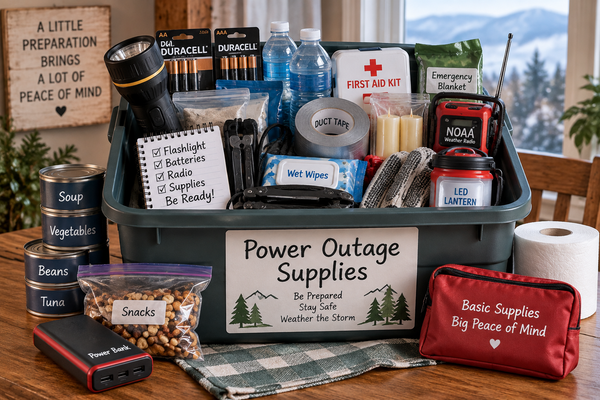
Keep a few basic items together where you can find them in the dark.
Include flashlights, batteries, a battery-powered radio if you have one, charging banks, and other necessities your household would need.
Don’t bury the flashlight in a drawer underneath seventeen things.
When the electricity goes out, you want to know exactly where it is.
Our Power Outage Mountain Know-How article goes into much more detail, so there’s no reason to duplicate all of that here.
Make a Winter List Before You Spend Any Money
Walk through the house with a piece of paper.
Make three columns:
Needs fixing now
Would be nice to fix
Can wait
That’s an old-fashioned way of keeping a small problem from turning into a shopping spree.
Maybe you really do need weatherstripping for the back door.
But perhaps you don’t need $300 worth of new curtains.
Maybe the outdoor faucet needs a $4 cover.
Maybe the old blanket you already own works perfectly well as an extra layer on the bed.
Fix the problem—not everything surrounding the problem.
Winter Preparation Doesn’t Have to Be Expensive
Most families don’t have thousands of extra dollars sitting around for home improvements.
Fortunately, winter preparation doesn’t have to begin with expensive projects.
Start with what you can do yourself.
Stop drafts. Protect exposed pipes. Check the furnace filter. Move furniture away from vents. Find the water shutoff. Test the alarms. Put the flashlights where you can find them.
Then work your way through the bigger problems as money allows.
A few dollars and an afternoon spent preparing the house in the fall can prevent a cold, miserable—and sometimes very expensive—surprise in the middle of winter.
Mountain Know-How TipThe cheapest winter emergency is usually the one you prevent before winter gets here.
Mountain Heart Ministries
Hope for Today • Help for Tomorrow • Faith for the Journey
Helping our Appalachian neighbors one life, one family,
and one community at a time.
Contact
info@mountainheartministries.org
Serving mountain communities in Eastern Kentucky
and Northeast Tennessee.
“My little children, let us not love in word, neither in tongue;
but in deed and in truth.”
1 John 3:18 (KJV)
© 2026 Mountain Heart Ministries. All Rights Reserved.
Mountain Heart Ministries is a Christian nonprofit organization
dedicated to serving individuals and families with compassion,
dignity, and hope.