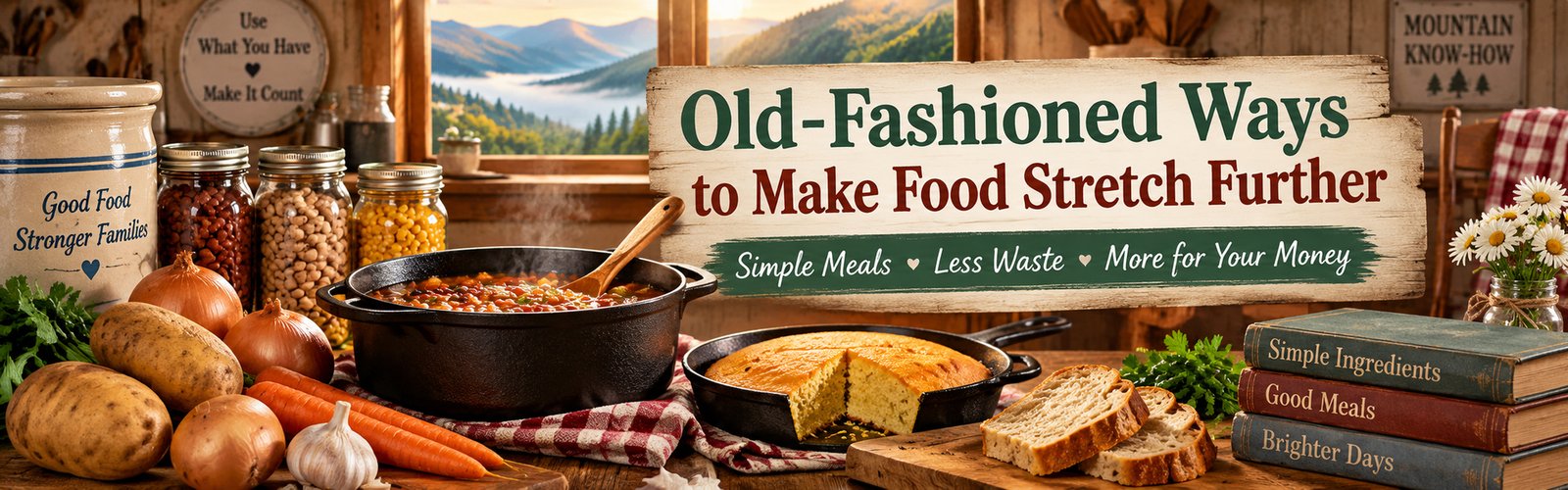
There was a time when making food stretch wasn’t called being frugal.
It was simply how people cooked.
Mountain families knew how to put a filling meal on the table without using a pound of meat for every supper or buying a cart full of expensive ingredients.
Beans simmered on the stove. Cornbread went with almost everything. Leftovers became tomorrow’s supper instead of going into the trash.
A little meat seasoned a whole pot of food.
Potatoes filled empty stomachs.
Gravy turned something simple into a meal.
Those old ways still work.
When grocery prices are high and money is tight, sometimes the smartest thing we can do is remember what our mothers and grandmothers already knew.
1. USE MEAT FOR FLAVOR, NOT ALWAYS AS THE MAIN DISH
Meat is often one of the most expensive things in the grocery cart.
Instead of planning every meal around a large piece of meat for each person, use smaller amounts to add flavor to other foods.
A little ham can season a pot of beans.
A small amount of sausage can flavor gravy.
Leftover chicken can become chicken and dumplings, soup, chicken and rice, or a casserole.
Ground beef can be stretched with beans, rice, potatoes, pasta, or vegetables.
You don’t have to eliminate meat.
Just make the meat work harder.
2. PUT BEANS BACK ON THE TABLE
It’s hard to beat a pot of beans when you need inexpensive, filling food.
Pinto beans, navy beans, great northern beans, black beans, and dried peas can provide several meals for relatively little money.
Serve them with cornbread and you have a simple, satisfying meal.
Leftover beans don’t have to taste exactly the same the next day.
You can add tomatoes or different seasonings, mash some for another dish, or use them in soup.
Dried beans usually cost less per serving than canned beans, although canned beans can be useful when cooking time, mobility, or energy is limited.
Mountain Know-How Tip: Cheap food isn’t a bargain if it’s too difficult for you to prepare. Buy what you can realistically cook and use.
3. DON’T UNDERESTIMATE THE POTATO
Potatoes have fed families through a lot of lean times.
They can be:
• Baked
• Boiled
• Mashed
• Fried
• Roasted
• Added to soup
• Added to casseroles
• Used in potato soup
A baked potato topped with leftover chili, beans, cheese, vegetables, or a little leftover meat can become an entire meal.
Leftover mashed potatoes can become potato cakes.
A few potatoes added to soup can make the soup go considerably farther.
They’re ordinary.
That’s exactly why they’re useful.
4. MAKE SOUP OUT OF WHAT YOU HAVE
Soup is one of the best ways to turn small amounts of food into several servings.
You don’t necessarily need a recipe.
Start with broth, stock, tomato juice, canned tomatoes, or water with appropriate seasoning.
Then look at what you have.
A little leftover chicken?
Add it.
Two carrots?
Add them.
Half an onion?
In it goes.
A handful of green beans?
Use them.
Leftover corn?
That works too.
Add potatoes, rice, pasta, or beans to make the soup more filling.
The trick is learning to look at small amounts of food as ingredients instead of leftovers.
5. LEARN TO MAKE A GOOD GRAVY
Our grandmothers understood gravy.
A small amount of meat drippings, flour, milk or broth, and seasoning could turn biscuits, potatoes, rice, or meat into a filling meal.
Sausage gravy and biscuits can feed several people with a relatively small amount of sausage.
Chicken gravy can help stretch leftover chicken.
Brown gravy can make mashed potatoes and a small serving of meat feel like a much more substantial supper.
Gravy isn’t fancy.
It just makes a little bit go farther.
6. CORNBREAD CAN ROUND OUT A MEAL
Beans and cornbread became a traditional meal for a reason.
Cornbread is inexpensive, filling, and goes well with beans, soup, greens, vegetables, and many other simple meals.
And leftover cornbread doesn’t necessarily have to be wasted.
Some people crumble it into milk or buttermilk.
It can also be used in dressing or other recipes.
The point isn’t that everybody has to eat the way our grandparents did.
The point is that inexpensive staple foods can make a modest meal satisfying.
7. RICE CAN STRETCH ALMOST ANYTHING
Rice is another useful pantry staple.
A small amount of chicken and vegetables can serve more people when served over rice.
Beans and rice make an inexpensive meal.
Leftover meat can be chopped and added to rice with vegetables.
Soup can be made more substantial with a handful of rice.
When you’re trying to stretch the grocery budget, think about what you can put OVER rice or what you can add TO rice.
8. MAKE DUMPLINGS
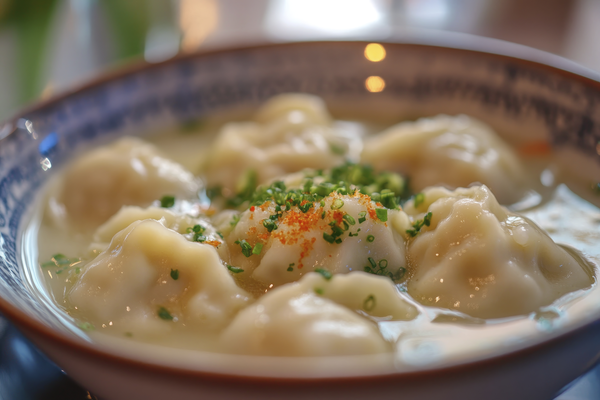
There is a reason chicken and dumplings fed large families.
You don’t need an enormous amount of chicken when the broth is flavorful and the dumplings make the meal filling.
The same principle applies to other simple flour-based foods.
Biscuits, dumplings, noodles, and cornbread historically helped stretch meals because flour and cornmeal were less expensive than meat.
That still makes sense today.
9. COOK ONCE AND PLAN FOR THE NEXT MEAL
If you’re cooking a roast, chicken, pot of beans, or another larger dish, think beyond tonight’s supper.
A chicken might become:
First meal: Chicken with vegetables.
Second meal: Chicken and rice.
Third meal: Soup made with the remaining chicken.
A pot of beans might become:
First meal: Beans and cornbread.
Second meal: Beans with fried potatoes.
Third meal: Bean soup with tomatoes and vegetables.
Planning for leftovers doesn’t mean eating exactly the same plate three nights in a row.
It means cooking once and using that work more than once.
10. SAVE SMALL AMOUNTS OF LEFTOVERS
That spoonful of corn doesn’t look like much.
Neither does half a cup of green beans.
But several small leftovers together can become soup.
Keep a covered container in the refrigerator for usable leftovers you plan to use soon, or freeze appropriate leftovers in small containers.
Be sensible about food safety. Refrigerate leftovers promptly, and don’t save food that has been sitting out too long just because you hate to waste it.
Saving money isn’t worth getting sick.
11. USE THE FREEZER AS A MONEY-SAVING TOOL
Your freezer isn’t only for frozen dinners and ice cream.
Freeze leftover portions before you’re tired of eating them.
Freeze bread before it molds.
Freeze extra soup.
Freeze cooked beans in meal-sized portions.
Freeze meat when you find a genuinely good sale and can afford to buy extra.
Label things so you know what they are and when you froze them.
A freezer full of mysterious containers nobody wants to eat isn’t saving money.
12. MAKE ONE-DISH MEALS
Casseroles, soups, stews, and skillet meals are good ways to combine smaller amounts of several ingredients.
Instead of serving meat, potatoes, vegetables, and another side separately, combine some of them.
A little ground beef can go into a casserole with potatoes.
Chicken can be combined with rice and vegetables.
Sausage can flavor beans or potatoes.
Leftover ham can go into soup.
One-dish meals make it easier to stretch the expensive ingredient with less expensive ones.
13. DON’T THROW AWAY FOOD JUST BECAUSE IT ISN’T ENOUGH FOR A MEAL
This may be one of the biggest lessons from old-fashioned cooking.
Half a chicken breast isn’t enough to feed a family.
But chopped into soup, it can help.
One serving of roast isn’t enough for supper tomorrow.
But chopped with potatoes and onions, it might become part of another meal.
A small bowl of vegetables isn’t enough for everybody.
But added to soup, it matters.
Ask yourself:
“What can I make WITH this?”
instead of:
“Is this enough for another meal?”
14. SERVE SOMETHING FILLING WITH THE MEAL
If supper is a little skimpy, add an inexpensive filling food.
That might be:
• Cornbread
• Biscuits
• Potatoes
• Rice
• Beans
• Pasta
• Bread
• Oatmeal at breakfast
You don’t need six different dishes on the table.
You need enough wholesome food to satisfy the people eating it.
15. DON’T LET “CHEAP” FOOD COST YOU MORE
This one matters.
A giant package isn’t a bargain if half of it spoils.
A sale isn’t a bargain if nobody in your house will eat the food.
Buying ten cans because they’re discounted isn’t saving money if you needed that money for milk and bread.
And driving 25 miles to save 50 cents can cost more in gasoline than you saved.
Look at the whole picture.
The best bargain is food your household will actually eat, in an amount you can use, at a price you can afford.
THE OLD WAYS STILL HAVE SOMETHING TO TEACH US
Our parents and grandparents didn’t have endless grocery-store choices.
Many mountain families grew what they could, preserved food when it was plentiful, and learned how to make a small amount feed a houseful of people.
They knew how to turn beans, potatoes, cornmeal, flour, vegetables, and a little meat into supper.
There’s no shame in making food stretch.
There’s wisdom in it.
Before buying something else, look in the refrigerator.
Look in the pantry.
Look in the freezer.
Then ask the old-fashioned question:
“What can I make with what I’ve already got?”
You may discover there’s another meal sitting there after all.
That’s Mountain Know-How.
Use what you have. Waste as little as possible. And make what you’ve got go a little farther.
Mountain Heart Ministries
Hope for Today • Help for Tomorrow • Faith for the Journey
Helping our Appalachian neighbors one life, one family,
and one community at a time.
“My little children, let us not love in word, neither in tongue;
but in deed and in truth.”
1 John 3:18 (KJV)
© 2026 Mountain Heart Ministries. All Rights Reserved.
Mountain Heart Ministries is a Christian nonprofit organization
dedicated to serving individuals and families with compassion,
dignity, and hope.