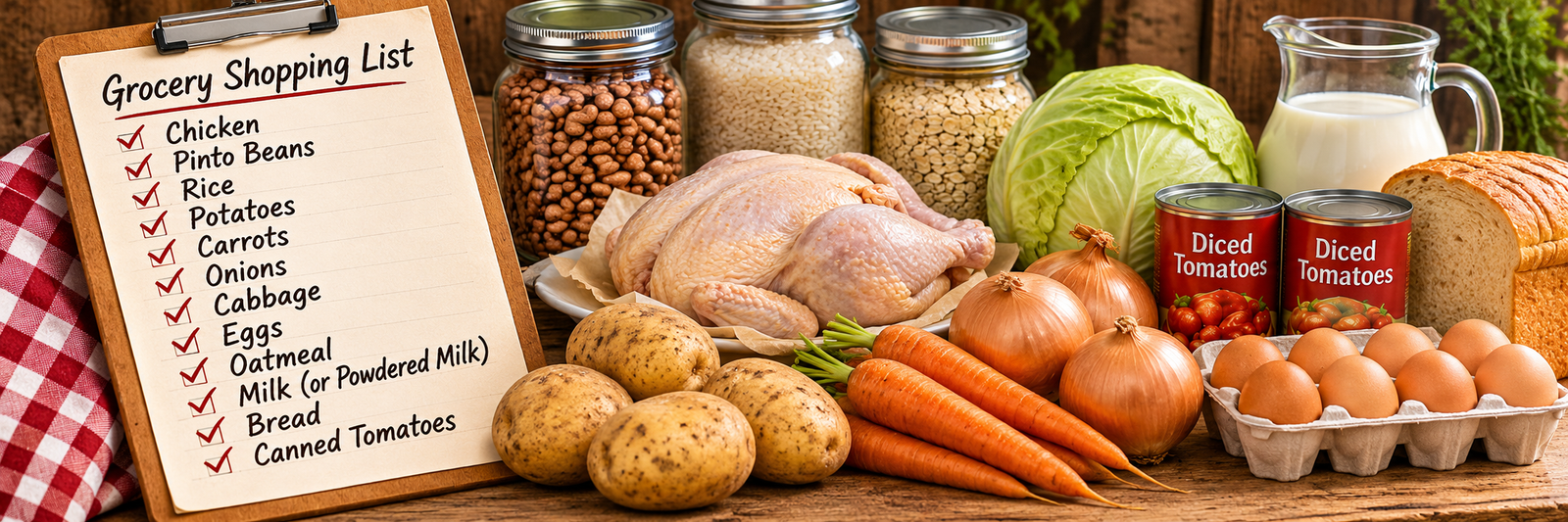
Simple, filling meals that help stretch your grocery money without wasting food.
There was a time when planning meals around what you already had wasn’t called budgeting. It was just the way people cooked.
A pot of beans might be supper one evening and lunch the next day. Leftover chicken became soup. A few potatoes, an onion, and some vegetables could turn into another meal without another trip to the grocery store.
That kind of practical cooking still works today.
When grocery money is tight, the secret isn’t necessarily finding seven different inexpensive recipes. It’s choosing a few affordable ingredients that can be used in several different ways.
Let’s see how we can turn one small grocery list into a week’s worth of simple meals for two adults.
Start With a Small Grocery List
This example assumes you already have a little salt, pepper, cooking oil, and basic seasonings.
| Grocery item | Quantity |
|---|---|
| Whole chicken | 1, approximately 4–5 pounds |
| Dried pinto beans | 1 pound |
| White rice | 2 pounds |
| Potatoes | 5 pounds |
| Carrots | 2 pounds |
| Onions | 2 pounds |
| Cabbage | 1 medium head |
| Eggs | 1 dozen |
| Old-fashioned oatmeal | 18-ounce container |
| Peanut butter | 16-ounce jar |
| Bread | 1 loaf |
| Cornmeal mix | 1 small package |
| Canned tomatoes | 2 cans |
| Frozen mixed vegetables | 1 bag |
| Bananas | 7 |
| Milk or powdered milk | Enough for the week |
Estimated grocery cost: approximately $45–$60, depending on local prices, sales, and package sizes.
This is a very basic grocery plan, not a complete long-term diet. It offers a starting point for stretching limited food dollars, and additional fruits, vegetables, dairy foods, or other nutritious items should be included when the budget allows.
Prepare a Few Things Ahead
A little preparation at the beginning of the week can save both time and money.
Cook the chicken. Roast or simmer the chicken until it reaches a safe internal temperature of 165°F. Remove the meat from the bones and divide it into portions for several meals.
Save the bones to make broth, if you wish. Keep the broth refrigerated or frozen until needed.
Cook the beans. Soak and cook the dried pinto beans according to package directions. Season them with onion, pepper, or other favorite seasonings.
Prepare vegetables. Wash the carrots, cabbage, and potatoes. Chop only what you need, keeping the rest properly stored.
Important: Don’t leave a week’s worth of cooked chicken, beans, or broth in the refrigerator. Refrigerate leftovers promptly, use within three to four days, or freeze portions for later in the week. Thaw frozen portions safely in the refrigerator.
Seven Days of Simple Meals
Monday
Breakfast: Oatmeal with sliced banana.
Lunch: Peanut butter sandwiches and carrot sticks.
Supper: Roast chicken, potatoes, and cooked carrots.
Save some chicken for later meals and freeze portions you won’t use within the next few days.
Tuesday
Breakfast: Scrambled eggs and toast.
Lunch: Leftover chicken and potatoes.
Supper: Pinto beans, rice, and cornbread.
Cook enough beans for another meal, but refrigerate or freeze the leftovers promptly.
Wednesday
Breakfast: Oatmeal with peanut butter stirred in.
Lunch: Beans and cornbread.
Supper: Chicken and vegetable soup.
Use chicken, carrots, onions, frozen mixed vegetables, and homemade broth. Add potatoes or rice to make the soup more filling.
Thursday
Breakfast: Fried egg and toast.
Lunch: Leftover chicken soup, reheated thoroughly.
Supper: Fried potatoes, onions, and cabbage with scrambled eggs.
This is an inexpensive, filling supper that doesn’t require meat.
Friday
Breakfast: Oatmeal and banana.
Lunch: Peanut butter sandwiches.
Supper: Tomato rice and beans.
Combine cooked rice, pinto beans, canned tomatoes, and seasonings. Add a little onion for extra flavor.
Use refrigerated leftovers within their safe storage period, or thaw portions frozen earlier in the week.
Saturday
Breakfast: Scrambled eggs and toast.
Lunch: Leftover tomato rice and beans.
Supper: Chicken, cabbage, and potato skillet.
Use a portion of chicken frozen earlier in the week, along with potatoes, onions, and shredded cabbage. Cook everything together until thoroughly heated.
Sunday
Breakfast: Oatmeal with banana or peanut butter.
Lunch: Egg sandwiches and carrot sticks.
Supper: Vegetable and bean soup with cornbread.
Combine remaining vegetables, beans, canned tomatoes, and seasonings. Serve with freshly made cornbread.
This is a good way to use remaining ingredients without letting them go to waste.
Make One Chicken Stretch Across Several Meals
A whole chicken can be one of the better grocery values when the price is right.
Instead of serving large portions at one meal, use smaller amounts in dishes where the chicken is combined with other ingredients.
For example, a chicken can provide meat for a roast dinner, soup, and a skillet meal.
The bones can also be simmered for broth, adding flavor to rice and soups.
Always compare the price per pound. Sometimes chicken leg quarters or other cuts are less expensive than a whole bird.
And remember, the amount of usable meat varies with the size of the chicken.
Beans Are One of the Best Grocery Bargains
Dried beans are inexpensive, filling, and useful in many different dishes.
A pound of dried beans generally produces several cups of cooked beans, enough for multiple servings.
They can be served with cornbread, spooned over rice, added to soup, or combined with tomatoes and vegetables.
For people who don’t have the time or ability to cook dried beans, canned beans are a convenient alternative.
Rinsing canned beans can also help reduce some of their sodium.
Don’t Overlook Potatoes and Cabbage
Potatoes and cabbage are two humble foods that can help stretch a grocery budget.
Potatoes can be baked, boiled, mashed, added to soup, or cooked in a skillet.
Cabbage can be served cooked, added to soup, or shredded for a simple salad.
A whole cabbage often provides several servings, and it generally keeps longer in the refrigerator than delicate salad greens.
Both are useful ingredients when you’re trying to make inexpensive meals more substantial.
Keep Breakfast Simple
Breakfast doesn’t have to be expensive.
Oatmeal, eggs, toast, peanut butter, and fruit provide several combinations without buying a different breakfast food for every day.
Plain oatmeal is usually less expensive per serving than individual flavored packets.
You can add cinnamon, fruit, or peanut butter for variety.
And eggs aren’t just for breakfast. They can make a quick supper when meat is too expensive.
What If You Have More Than Two People to Feed?
This meal plan is designed as a starting point for two adults.
For a larger family, increase the quantities of rice, beans, potatoes, vegetables, and other foods according to the number of people and their needs.
A family with growing children may need considerably more food than two older adults.
Don’t assume that simply adding extra rice or potatoes will provide all the nutrition everyone needs. Try to include a variety of protein foods, vegetables, fruits, and other nutritious foods as resources allow.
A Few Ways to Save Even More
Check what you already have. Before shopping, look through your pantry, refrigerator, and freezer.
Compare unit prices. The largest package isn’t always the least expensive.
Buy store brands. Many are comparable to name brands at a lower price.
Plan around sales. If chicken is expensive this week, use a different affordable protein.
Freeze leftovers. Don’t wait until food is about to spoil.
Use what you buy. A bargain isn’t really a bargain if half of it ends up in the trash.
Good Meals Don’t Have to Be Fancy
A simple supper of beans and cornbread may not look impressive in a cookbook, but it can be warm, filling, and satisfying.
The same is true of homemade soup, fried potatoes, or a skillet of chicken and vegetables.
Stretching grocery money doesn’t mean every meal has to be exactly the same. It means learning to use familiar ingredients in different ways and making the most of what you have.
Start with a short grocery list, plan a few meals, and find ways to use the leftovers safely.
Sometimes the best way to save money at the grocery store is to make better use of the food you already brought home.
Want more ‘Mountain Know-How’?
Mountain Heart Ministries
Hope for Today • Help for Tomorrow • Faith for the Journey
Helping our Appalachian neighbors one life, one family,
and one community at a time.
“My little children, let us not love in word, neither in tongue;
but in deed and in truth.”
1 John 3:18 (KJV)
© 2026 Mountain Heart Ministries. All Rights Reserved.
Mountain Heart Ministries is a Christian nonprofit organization
dedicated to serving individuals and families with compassion,
dignity, and hope.