
Something quits working and our first thought is often, “Well, I guess I need a new one.”
Sometimes we do. But sometimes the problem is a loose screw, a clogged drain, a worn washer, or a five-dollar part.
There was a time when replacing something was the last choice, not the first. People repaired what they owned because buying another one cost money — and money wasn’t something to waste.
You don’t have to be an experienced handyman to handle every little problem around the house. A few basic repairs are surprisingly simple, and learning to recognize them can save quite a bit of money over the years.
Here are ten good places to start.
1. A Toilet That Keeps Running
That sound of water running long after the toilet has been flushed isn’t just annoying. It can waste a surprising amount of water.
Before calling a plumber, take the lid off the toilet tank and look inside.
One of the most common problems is the flapper — the rubber piece at the bottom of the tank that lifts when you flush. As it gets old, it may stop sealing properly.
Replacement flappers are inexpensive and usually don’t require special tools to install.
The chain attached to the flapper can also cause trouble. If it’s too short, the flapper may not close completely. If it’s too long, it can sometimes get caught underneath it.
A few minutes of investigation may solve the problem.
2. A Slow or Clogged Sink Drain
Before reaching for a bottle of harsh drain cleaner, check for the obvious.
Bathroom sink drains commonly collect hair, soap and other debris around the stopper. Sometimes simply removing and cleaning the stopper solves the problem.
Kitchen sinks may slow down because of grease and food buildup.
A small drain snake or inexpensive plastic drain-cleaning strip can remove many simple clogs without chemicals or a plumber.
If several drains in the house are backing up at the same time, however, that’s a different matter. You may have a larger plumbing problem that needs professional attention.
3. A Loose Cabinet Door
A sagging cabinet door can make an otherwise perfectly good cabinet look worn out.
Often, nothing is actually wrong with the cabinet.
Check the hinge screws first.
They may simply need tightening.
If a screw keeps spinning because the hole has become enlarged, the repair may still be simple. Depending on the cabinet material and damage, the hole can sometimes be repaired so the screw will hold again.
Before thinking about replacing cabinets — or even replacing the hinge — find out whether you’re dealing with nothing more than a loose screw.
4. A Door That Won’t Latch
Have you ever had a door that closes but won’t quite catch?
Before replacing the doorknob or calling someone to repair the door, look at where the latch meets the strike plate on the door frame.
Sometimes houses settle slightly. Hinges loosen. Wood expands and contracts with changes in humidity.
The result may be a latch that’s only a fraction of an inch out of alignment.
First tighten the hinge screws. That alone may pull the door back into position.
If that doesn’t work, look carefully at the strike plate. A small adjustment may be all that’s needed.
5. A Dripping Faucet
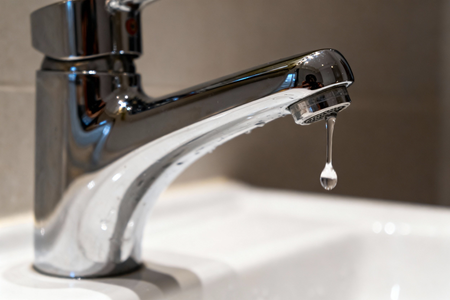
Drip.
Drip.
Drip.
A dripping faucet can drive you crazy — and waste water at the same time.
Depending on the type of faucet, the culprit may be a worn washer, O-ring or cartridge.
These parts often cost far less than replacing the entire faucet.
Before taking anything apart, turn off the water supply under the sink. Take a picture of the faucet and, if possible, identify the manufacturer and model. That makes finding the correct replacement part much easier.
And here’s another old-fashioned trick that still works:
As you take something apart, lay the pieces down in the order you removed them.
Then you know how they go back together.
Taking a few pictures with your phone along the way doesn’t hurt either.
6. A Small Hole in Drywall
A nail hole certainly doesn’t require new drywall.
Neither do many small dents and holes.
Small holes can often be repaired with spackling compound, allowed to dry, lightly sanded and touched up with paint.
Larger holes may require a patch, but drywall repair kits are inexpensive and intended specifically for this purpose.
The trick is not to make a small repair into a large project. Use the smallest repair method appropriate for the damage.
7. A Torn Window Screen
A hole in a window screen doesn’t necessarily mean you need a new window — or even a professionally made replacement screen.
Very small holes can sometimes be patched.
If the screening itself is badly damaged, the screen material can often be replaced while keeping the existing frame.
Screen material and spline — the rubber cord that holds the screen in the frame — are readily available. A simple spline roller makes the job easier.
The first attempt may not be perfect.
That’s okay.
You’re repairing a screen, not entering it in the county fair.
8. A Drafty Door
If you can feel cold air coming around an exterior door in winter, don’t automatically assume you need an expensive new door.
First check the weatherstripping.
Weatherstripping wears out, gets compressed and sometimes pulls loose.
Replacing it is considerably cheaper than replacing a door.
Also look at the bottom door sweep. If there’s a visible gap underneath the door, a worn or improperly adjusted sweep may be the problem.
A few dollars spent stopping drafts can also reduce heating and cooling costs.
9. A Drawer That Won’t Work Properly
A kitchen or dresser drawer that sticks, tilts or refuses to close can be frustrating.
But before getting rid of the furniture or replacing the cabinet, pull the drawer out and look underneath.
Is a screw loose?
Has a drawer slide moved?
Is something caught behind the drawer?
Has a wooden guide become worn?
Sometimes the repair is obvious once you actually look at how the drawer works.
That’s an important part of learning to repair things:
Don’t start by assuming you know what’s broken. Look first.
10. Something That Suddenly “Quit Working”
This may be the simplest money-saving habit of all.
Before deciding an appliance, lamp or other household item is dead, check the obvious things.
Is it plugged in?
Does the outlet work?
Did a breaker trip?
Does it have a reset button?
Does it use batteries?
Is a cord loose or visibly damaged?
Is there a filter that’s completely clogged?
Is a safety switch preventing it from operating?
You’d be surprised how many “broken” things aren’t actually broken.
Try another outlet. Check the owner’s manual if you still have it. Search the manufacturer’s troubleshooting information.
Five minutes of checking can sometimes save hundreds of dollars.
Know When NOT to Fix It Yourself
Saving money is good.
Getting hurt isn’t.
Some repairs belong in the hands of someone who knows what they’re doing.
Be especially cautious with:
- Electrical wiring and electrical panels
- Gas lines or gas appliances
- Major plumbing leaks
- Structural problems
- Roof repairs requiring dangerous climbing
- Heating and cooling systems
- Anything you don’t understand well enough to work on safely
There’s a big difference between tightening a cabinet hinge and experimenting with electricity.
Knowing your limits is part of good common sense too.
Keep a Small Basic Tool Kit
You don’t need a workshop full of expensive tools to handle simple household repairs.
A basic household tool kit might include a hammer, several screwdrivers, adjustable wrench, pliers, tape measure, utility knife, flashlight and a few other commonly used items.
Buy tools as you actually need them rather than buying an enormous set filled with things you may never use.
And take care of the tools you have.
A decent screwdriver can last for decades.
Before You Buy a Replacement, Take Five Minutes
The next time something around the house stops working properly, resist the urge to immediately start shopping.
Take five minutes.
Look at it.
Check the simple things.
Ask yourself:
What exactly isn’t working?
Is something loose, clogged, worn or out of adjustment?
Is there an inexpensive replacement part available?
You may still decide that replacement makes the most sense.
But at least you’ll know why you’re replacing it.
Mountain Heart Ministries
Hope for Today • Help for Tomorrow • Faith for the Journey
Helping our Appalachian neighbors one life, one family,
and one community at a time.
Contact
info@mountainheartministries.org
Serving mountain communities in Eastern Kentucky
and Northeast Tennessee.
“My little children, let us not love in word, neither in tongue;
but in deed and in truth.”
1 John 3:18 (KJV)
© 2026 Mountain Heart Ministries. All Rights Reserved.
Mountain Heart Ministries is a Christian nonprofit organization
dedicated to serving individuals and families with compassion,
dignity, and hope.