Walk down the cleaning aisle of almost any store and you’ll find a different product for practically everything.
One for the sink. Another for the shower. Something else for stainless steel. Special sprays for furniture, glass, appliances, odors, carpets and probably a few things we haven’t thought of yet.
Our grandmothers didn’t have a cabinet full of specialized products.
They had a handful of basic supplies — and they knew how to use them.
Some old household tricks deserve to stay in the past. But plenty of them still work just fine, and many can save money while making everyday jobs around the house a little easier.
Here are 15 worth knowing.
1. Keep Baking Soda in the Refrigerator
This may be one of the oldest tricks in the book, but there’s a reason people still do it.
An open container of baking soda can help absorb refrigerator odors.
But don’t leave the same box sitting there forever.
Replace it periodically, and don’t use refrigerator deodorizing baking soda later for cooking. Once it has spent months absorbing odors, its baking days are over.
Baking soda can also be useful for gently scrubbing many washable surfaces because it provides a little abrasion without requiring an expensive specialty cleaner.
Just remember that even simple household products aren’t appropriate for every surface. When in doubt, test a small hidden area first.
2. Turn Worn Towels Into Cleaning Rags
A towel doesn’t stop being useful just because it’s no longer pretty enough for the bathroom.
Cut worn towels into manageable pieces and keep them with your cleaning supplies.
Old cotton T-shirts work too.
They’re useful for:
- Dusting
- Washing windows
- Cleaning spills
- Wiping baseboards
- Dirty outdoor jobs
- Cleaning the car
Wash them and use them again.
A household can go through an amazing number of paper towels. Reusable rags won’t eliminate the need for them entirely, but they can certainly reduce it.
Grandma didn’t call that being environmentally friendly.
She called it not wasting a perfectly good piece of cloth.
3. Use Vinegar on Mineral Deposits
If you have hard water, you’ve probably seen the white, crusty deposits that collect around faucets and showerheads.
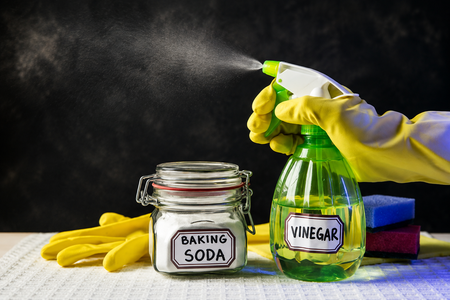
White vinegar can help dissolve many of those mineral deposits.
For a removable showerhead, soaking the affected portion in vinegar can loosen buildup. For faucet areas, a vinegar-dampened cloth may help soften deposits before gentle cleaning.
But vinegar is acidic, so don’t assume it’s safe for every surface.
Natural stone such as marble can be damaged by acids, and some finishes require special care.
“Natural” doesn’t automatically mean “safe for everything.”
4. Make Drawers Slide More Easily
Old wooden drawers can become stubborn.
Before deciding the furniture is worn out, look at where the wooden surfaces rub against each other.
For traditional wood-on-wood drawers, rubbing a little plain paraffin wax along the contact points can sometimes help the drawer glide more easily.
A candle was traditionally used for the same purpose, although plain paraffin is preferable to a heavily scented or colored candle.
If the drawer uses modern metal slides, inspect those instead. A loose screw or damaged slide may be the actual problem.
Sometimes an annoying household problem needs only five minutes of attention.
5. Don’t Throw Away a Shirt Over a Button
A missing button can turn a perfectly good shirt into something that hangs unworn in the closet.
Keep a small mending box or basket containing:
- Needles
- Several colors of thread
- Scissors
- Safety pins
- Spare buttons
- A few basic patches
You don’t need to be an accomplished seamstress.
Learning to sew on a button, close a small seam or repair a simple tear can extend the life of clothing considerably.
And when clothing truly is beyond repair, save any useful buttons before turning the fabric into rags.
That’s old-fashioned household recycling.
6. Give Wilted Cleaning Sponges and Brushes a Second Job
Not everything has to go directly from “kitchen” to “trash.”
When a scrub brush, toothbrush or cleaning tool is no longer suitable for its original purpose, it may still have another use.
An old toothbrush is particularly handy for cleaning:
- Around faucets
- Window tracks
- Small corners
- Grout
- Hardware
- Other tight spaces
Clearly separate old cleaning brushes from anything used for personal hygiene.
A permanent marker or designated cleaning container solves that problem easily.
Use something until it’s actually used up.
7. Put a Tray Where Muddy Shoes Naturally Land
Sometimes the best household trick isn’t cleaning dirt.
It’s preventing the dirt from getting there.
If everyone enters through the same door, put a washable mat or inexpensive boot tray right where shoes naturally come off.
Don’t put it six feet away because that’s where it looks prettier.
Put it where people actually stand.
The same principle works throughout the house.
Make the easy thing the right thing.
A basket where mail naturally gets dropped works better than an elaborate organizing system nobody uses.
8. Freshen a Mattress Without Fancy Sprays
Mattresses collect dust, skin cells and odors over time.
When you change the bedding, give the mattress a chance to air out.
Vacuuming the surface with an upholstery attachment can remove dust and debris.
For odor control, some people lightly sprinkle plain baking soda over a dry mattress, allow it to sit for a while and then vacuum it thoroughly.
Avoid soaking a mattress with liquids. Moisture trapped inside a mattress can create much bigger problems than the odor you were trying to solve.
And while you’re there, look underneath the bed.
You may discover enough dust to start another mattress.
9. Deal With Food Containers Before Odors Set In
Plastic containers have a remarkable ability to remember last Tuesday’s spaghetti.
Wash food containers promptly rather than leaving oily or strongly flavored foods sitting in them for days.
Baking soda and warm water can sometimes help with lingering odors.
Sunlight and fresh air may also help some washable containers after they’ve been thoroughly cleaned.
But if a plastic container has become badly scratched, damaged or impossible to clean properly, don’t keep it forever simply because throwing things away feels wasteful.
Being frugal means getting good use from things.
It doesn’t mean keeping everything until the end of time.
10. Keep a Small Basket for Things That Need Attention
Every house has them.
The loose cabinet knob.
The sock with a small hole.
The flashlight that needs batteries.
The picture hanger that came loose.
The toy that needs a drop of glue.
Instead of letting these little jobs scatter throughout the house, keep a designated basket or small box for manageable items that need attention.
Then occasionally sit down and work through the pile.
Ten small jobs tackled at once can feel much easier than noticing the same ten irritating problems every day for six months.
11. Let Fresh Air Do Some of the Work
We buy sprays to make houses smell like fresh air.
Sometimes opening the windows works better.
When weather and outdoor air quality permit, airing out the house can help remove stale indoor odors.
Sunlight can also be useful for some washable household items.
Of course, not every day is suitable for open windows. Pollen, humidity, extreme temperatures and outdoor smoke can make keeping the house closed the better choice.
But when conditions are right, fresh air is still free.
Use it.
12. Don’t Buy a Special Cleaner Until You Need One
This may save more money than any particular cleaning recipe.
Before buying another bottle, ask:
Do I already own something that will safely do this job?
Warm water and a little dish soap handle an astonishing number of ordinary household cleaning jobs.
Baking soda can help with some scrubbing and deodorizing.
Vinegar has appropriate uses.
Microfiber cloths and old cotton rags handle many others.
There certainly are jobs that require specific products. But buying a different cleaner for every surface can fill a cabinet quickly.
Start simple.
Add something specialized only when there’s a reason for it.
And never mix household cleaning chemicals unless the product directions specifically say it’s safe. In particular, bleach should never be mixed with ammonia or acids such as vinegar because dangerous gases can result.
13. Put Things Where They’re Actually Used
Household organization doesn’t have to involve matching bins and beautiful labels.
It has to work.
Keep scissors where you usually need scissors.
Keep spare trash bags near the trash can.
Keep batteries near the things that commonly need batteries.
Keep cleaning supplies near the area where they’re used, when they can be stored safely away from children and pets.
If you repeatedly walk across the house to retrieve the same item, that’s a clue.
Maybe the item is stored in the wrong place.
Good organization isn’t about making a house look like a magazine photograph.
It’s about making everyday life easier.
14. Have a Place for Leftover Hardware
If you assemble furniture, replace cabinet hardware or complete a small repair, you often end up with an extra screw, washer or little metal piece.
Don’t toss it into a random drawer.
Keep a small divided container, jar collection or labeled box for spare household hardware.
Sort items enough that you can actually find them again.
The next time a screw disappears from a cabinet pull, you may already own exactly what you need.
The trick is knowing where you put it.
15. Clean a Little Before It Becomes a Big Job
This isn’t glamorous, but it works.
Wipe up a spill before it dries.
Clean the stovetop before grease gets baked onto it repeatedly.
Deal with mildew when you first notice it.
Remove clutter before it becomes an entire room.
Sweep dirt near the entrance before it gets tracked through the house.
Five minutes now can prevent an hour of scrubbing later.
People sometimes look for a miracle cleaning product when what they really need is simply to tackle the problem sooner.
You Don’t Need to Save Everything
Old-fashioned thrift can go too far.
There is no prize for owning 147 margarine containers with mismatched lids.
Save things you genuinely reuse.
Keep a reasonable supply of jars, rags, bags, boxes or containers if they have a purpose.
But if they’re overflowing the cabinet and you haven’t touched them in three years, they’re no longer saving you money.
They’re clutter.
The goal is to make good use of what you have — not to become the caretaker of everything you’ve ever purchased.
A Well-Run Home Doesn’t Have to Be an Expensive Home
A comfortable home isn’t created by having the newest appliances, matching storage containers or a different product for every household problem.
It’s created by paying attention.
Notice the little repair before it becomes a big repair.
Use things more than once when it makes sense.
Take care of what you own.
Keep useful supplies where you can find them.
And learn a few basic skills instead of automatically buying a solution.
Mountain Heart Ministries
Hope for Today • Help for Tomorrow • Faith for the Journey
Helping our Appalachian neighbors one life, one family,
and one community at a time.
Contact
info@mountainheartministries.org
Serving mountain communities in Eastern Kentucky
and Northeast Tennessee.
“My little children, let us not love in word, neither in tongue;
but in deed and in truth.”
1 John 3:18 (KJV)
© 2026 Mountain Heart Ministries. All Rights Reserved.
Mountain Heart Ministries is a Christian nonprofit organization
dedicated to serving individuals and families with compassion,
dignity, and hope.