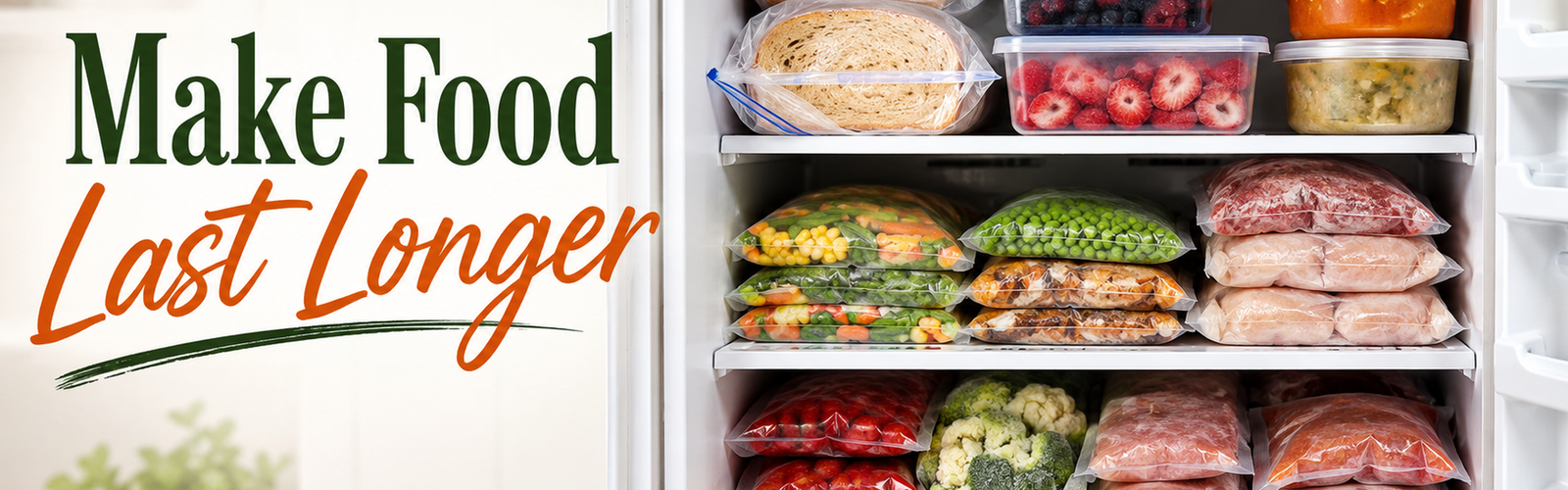
Throwing away spoiled food is a little like throwing money directly into the trash can.
A few strawberries turn fuzzy. Half a loaf of bread molds. Celery goes limp in the refrigerator. You discover an onion in the back of the pantry that has sprouted enough to start its own garden.
It doesn’t seem like much at the time.
But add up all those little bits of wasted food over a month — or a year — and they can represent a surprising amount of the grocery budget.
Our grandmothers couldn’t afford to routinely throw food away, so they learned how to store it, use it and make it last.
Many of those simple habits still work today.
1. Don’t Wash Berries Until You’re Ready to Eat Them
It seems sensible to wash strawberries, blueberries and raspberries as soon as you bring them home.
But extra moisture encourages mold and deterioration.
Unless you’re preparing them specifically for storage using another proven method, berries generally keep better when they’re refrigerated dry and washed shortly before eating.
Check the container, too. If one berry is already moldy or crushed, remove it before it affects the others.
And don’t forget they’re in there.
Berries bought with good intentions don’t save anybody money if they’re discovered two weeks later behind the milk.
2. Keep Potatoes in a Cool, Dark Place
Potatoes prefer darkness and good air circulation.
Light can cause them to turn green, while warm conditions encourage sprouting and deterioration.
A cool pantry, cupboard or other dark, ventilated location is usually better than leaving them in a sunny spot on the kitchen counter.
Avoid sealing potatoes tightly in plastic without ventilation.
And check the bag occasionally. One rotten potato can quickly affect the potatoes around it.
3. Don’t Store Potatoes and Onions Together
They may look like natural pantry companions, but give them some space.
Onions release gases and moisture that can contribute to potatoes spoiling more quickly, and the combination isn’t ideal for long-term storage.
Keep both in cool, dry, well-ventilated areas — but store them separately.
A little distance can help both last longer.
4. Help Celery Stay Crisp
Celery has a frustrating habit of becoming limp before the whole bunch gets used.
One popular storage method is to wrap celery tightly in aluminum foil before refrigerating it. The foil allows some of the ripening gas to escape while helping retain moisture.
You can also cut celery into sticks and keep them refrigerated in a covered container with water, changing the water periodically.
And if celery has already become a little limp, don’t automatically throw it away.
If it isn’t spoiled, it may still be perfectly useful chopped into soup, stew or another cooked dish.
Food doesn’t have to look beautiful to be useful.
5. Freeze Bread Before It Molds
If your household can’t finish a loaf of bread before it begins to mold, stop trying.
Freeze part of it.
Bread freezes very well and individual slices can be removed as needed.
This is especially useful for households with only one or two people, where an entire loaf may simply be too much to eat quickly.
The same idea works for hamburger buns, hot dog buns, rolls and many baked goods.
Buy what you’ll use — and freeze what you won’t use soon.
6. Freeze Small Amounts of Ingredients Instead of Throwing Them Away
A recipe calls for two tablespoons of tomato paste.
The can contains much more.
What happens to the rest?
Too often it sits in the refrigerator until someone finally throws it away.
Instead, freeze leftover tomato paste in small portions.
You can do the same with:
- Broth
- Tomato sauce
- Chopped herbs
- Cooked beans
- Leftover gravy
- Small amounts of cooked meat
- Lemon or lime juice
- Some sauces
An ice cube tray can be handy for freezing small portions. Once frozen, transfer the portions to a labeled freezer container or bag.
Next time a recipe needs a little broth or tomato paste, you’ve already got it.
7. Store Fresh Herbs Like Something You Paid For
Because you did.
Fresh herbs can be expensive, especially when a recipe requires only a small amount.
Some tender herbs keep longer when treated almost like flowers — stems trimmed and placed in a little water. Depending on the herb, they may be stored on the counter or loosely covered in the refrigerator.
Other herbs do better wrapped gently in a slightly damp paper towel and refrigerated.
If you know you won’t use them before they deteriorate, chop and freeze them for cooked dishes.
They may not look pretty enough for a garnish after freezing, but they’ll still add flavor to soup, sauce or stew.
8. Learn Which Fruits Speed Up Ripening
Some fruits release significant amounts of ethylene gas as they ripen.
Apples and bananas are familiar examples.
That gas can cause nearby produce to ripen — and eventually spoil — faster.
Sometimes that’s useful.
Want an avocado to ripen faster? Putting it near an apple or banana can help.
Want other produce to last as long as possible?
Give heavy ethylene producers some room.
Understanding this one little fact can explain why produce sometimes seems to go bad unusually quickly.
9. Don’t Put Everything in the Refrigerator Door
The refrigerator door is convenient, but it’s also one of the warmest and most temperature-variable parts of the refrigerator.
Every time the door opens, items stored there are exposed to warmer air.
That makes the door better suited to things such as condiments than highly perishable foods.
Milk and other foods that need consistently cold temperatures generally do better toward the back of the main refrigerator compartment rather than in the door.
Convenience isn’t always the same thing as good storage.
10. Keep the Refrigerator Cold Enough
A refrigerator should generally be kept at 40°F or below, according to U.S. food-safety guidance.
Don’t assume the dial marked “3” or “cold” tells you the actual temperature.
An inexpensive refrigerator thermometer can tell you what’s really happening inside.
A refrigerator that’s too warm can shorten food life and create a food-safety problem.
A freezer should generally be maintained at 0°F.
Those are two temperatures worth remembering:
40°F refrigerator.
0°F freezer.
11. Use the Oldest Food First
Grocery stores rotate stock for a reason.
You can do the same thing at home.
When you bring home new cans, boxes or packages, put the newer ones behind the older ones when practical.
When you add new meat to the freezer, don’t bury last month’s packages underneath it.
This is sometimes called first in, first out, but Grandma didn’t need a business term for it.
She simply used the old stuff before opening the new stuff.
It works.
12. Have an “Eat Me First” Spot
This is one of the simplest ways to prevent refrigerator waste.
Designate a small container, basket or section of a shelf for food that needs to be used soon.
Maybe it contains:
- Half an onion
- A piece of leftover chicken
- Two servings of cooked vegetables
- An opened package of cheese
- A few strawberries
- Leftover rice
When someone wants lunch or you’re deciding what to cook, look there first.
It prevents perfectly good food from disappearing behind newer groceries until it’s too late.
13. Revive Vegetables Before Giving Up on Them
Some vegetables that look tired aren’t spoiled — they’re dehydrated.
Limp celery, carrots and certain leafy vegetables can sometimes regain crispness after spending a little time in cold water.
That won’t rescue spoiled produce, of course.
But there’s a difference between wilted and rotten.
Learn to recognize it.
A carrot that bends isn’t necessarily trash. It may be soup.
14. Use Your Freezer as a Money-Saving Tool
A freezer isn’t just for frozen pizza and ice cream.
It’s one of the best food-saving tools in the house.
If bananas are becoming too ripe, peel and freeze them for smoothies or baking.
Freeze leftover cooked meat before it spoils.
Freeze extra soup.
Freeze bread.
Freeze portions of a large batch of beans.
Freeze leftovers when you know your family won’t eat them soon enough.
But label everything.
Write down what it is and the date.
Otherwise your freezer eventually becomes a museum of unidentified frozen objects nobody wants to investigate.
15. Plan One “Use-It-Up” Meal Each Week
Before making the next grocery list, look at what’s already in the refrigerator.
What’s getting old?
What needs to be eaten?
Then build a meal around those foods.
It might become:
- Soup
- Omelets
- Fried rice
- Tacos
- Casserole
- Pizza
- Sandwiches
- A vegetable plate
It doesn’t have to be fancy.
In fact, this can become the easiest meal of the week.
Instead of asking, “What do I feel like cooking?”
ask:
“What do we already have that needs to be eaten?”
That one question can save a surprising amount of money.
Don’t Confuse Saving Food With Taking Chances
Reducing food waste does not mean eating food that may be unsafe.
If perishable food has been left at unsafe temperatures too long, discard it.
Mold on certain foods can extend below the surface where you can’t see it. Spoiled food cannot always be made safe simply by cutting off the bad-looking portion or cooking it.
And don’t depend entirely on smell. Harmful bacteria don’t always announce themselves with a bad odor.
Saving a few dollars isn’t worth making someone sick.
The goal is to prevent food from spoiling in the first place — not to rescue food after it has become unsafe.
Before You Go Grocery Shopping
Take five minutes and look in four places:
The refrigerator.
The freezer.
The pantry.
The kitchen counter.
You may discover that you already have three meals sitting in your house.
A package of chicken in the freezer, potatoes in the pantry and carrots that need to be used aren’t three unrelated ingredients.
They’re dinner.
Learning to see food that way can change how you shop.
Mountain Heart Ministries
Hope for Today • Help for Tomorrow • Faith for the Journey
Helping our Appalachian neighbors one life, one family,
and one community at a time.
Contact
info@mountainheartministries.org
Serving mountain communities in Eastern Kentucky
and Northeast Tennessee.
“My little children, let us not love in word, neither in tongue;
but in deed and in truth.”
1 John 3:18 (KJV)
© 2026 Mountain Heart Ministries. All Rights Reserved.
Mountain Heart Ministries is a Christian nonprofit organization
dedicated to serving individuals and families with compassion,
dignity, and hope.