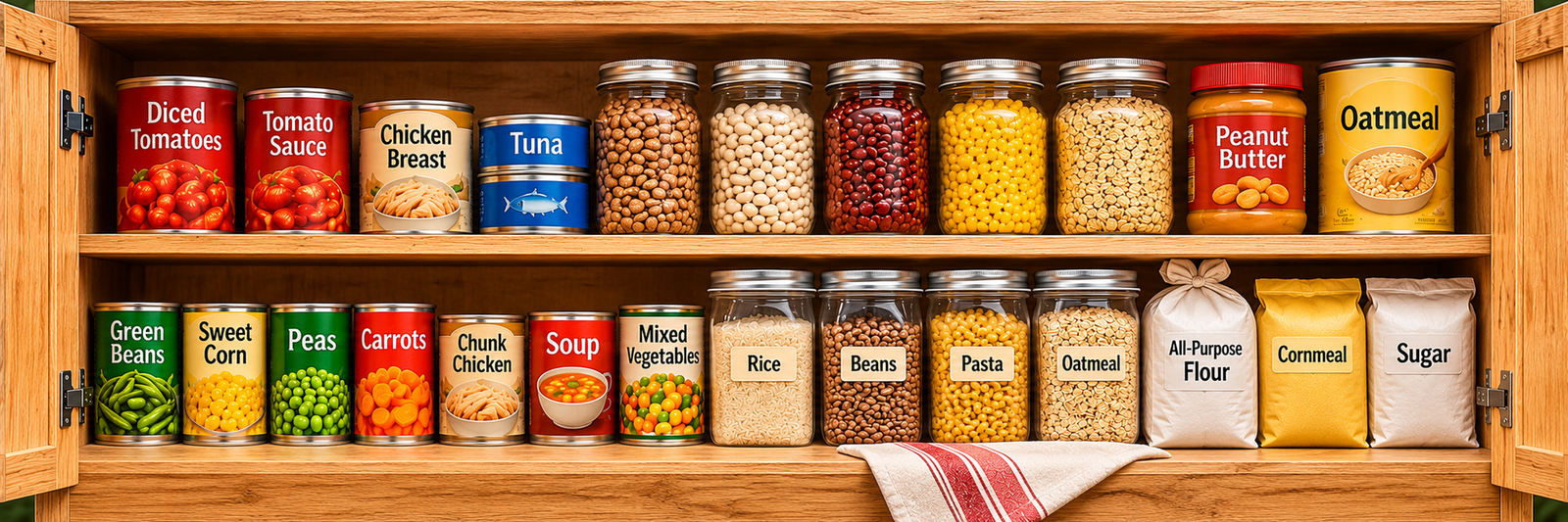
Simple, inexpensive foods to keep on hand for bad weather, unexpected emergencies, and those times when money is running short.
There was a time when most families kept a little extra food in the pantry. They didn’t call it emergency preparedness. It was simply common sense.
If snow covered the roads, the truck wouldn’t start, or there wasn’t enough money for another trip to town, there was usually something in the cupboard that could be turned into supper.
For families living in the mountains, that kind of planning still makes good sense.
You don’t need a basement full of food, expensive survival meals, or shelves of special supplies. A few carefully chosen groceries can help you get through several days when getting to the store isn’t possible.
Start With What Your Family Already Eats
The best emergency pantry isn’t filled with foods nobody likes.
Think about the meals you regularly prepare. Do you eat beans, rice, oatmeal, soup, or canned vegetables? Those are good places to start.
When you buy groceries, consider adding one extra item if your budget allows.
It might be a can of beans, a package of rice, or a jar of peanut butter.
One extra item may not seem like much, but over time those little purchases can build a useful supply.
The important thing is to buy foods you’ll actually use.
Ten Good Foods to Keep on Hand
These foods are generally inexpensive, easy to store, and useful in several different meals.
1. Dried beans
Pinto beans, navy beans, and great northern beans are filling and economical. A pot of beans can provide several meals, especially when served with cornbread or rice.
Remember that dried beans require water, cooking time, and a dependable source of heat. Keep a few cans of ready-to-eat beans for emergencies when cooking isn’t possible.
2. Rice
Rice is one of the most useful pantry staples. It can be served with beans, added to soup, or combined with vegetables and leftover meat.
White rice generally stores longer than brown rice because it contains less natural oil.
3. Oatmeal
Plain oatmeal makes an inexpensive breakfast and can also be used in baking.
Add raisins, cinnamon, peanut butter, or canned fruit for variety.
4. Canned vegetables
Green beans, corn, peas, carrots, and mixed vegetables are useful when fresh produce isn’t available.
They can be heated as a side dish or added to soups and casseroles.
Choose lower-sodium varieties when practical.
5. Canned meat or fish
Canned chicken, tuna, and salmon can provide protein without refrigeration before opening.
They can be used in sandwiches, soups, rice dishes, or simple casseroles.
6. Peanut butter
Peanut butter is filling, stores well unopened, and requires no cooking.
Spread it on crackers or bread, stir it into oatmeal, or eat a small amount with fruit.
7. Pasta
Macaroni, spaghetti, and other dried pasta are inexpensive and versatile.
Combine them with canned tomatoes, vegetables, or a little canned meat for a filling meal.
8. Canned tomatoes
Diced tomatoes, tomato sauce, and crushed tomatoes are useful for soups, beans, pasta, and stews.
They add flavor and help turn simple ingredients into a meal.
9. Crackers
Crackers are especially useful when the electricity is off and cooking isn’t possible.
They can be eaten with peanut butter, canned fish, or soup.
Rotate them regularly because they can become stale.
10. Powdered Milk
Powdered milk is one of those old-fashioned pantry staples that’s still worth keeping around.
Unlike fresh milk, unopened powdered milk doesn’t require refrigeration. You can mix only what you need, whether it’s a cup for breakfast or a little milk for cooking.
It’s useful for oatmeal, pancakes, biscuits, mashed potatoes, and many other everyday foods.
Nonfat dry milk generally stores longer than whole powdered milk. Keep it tightly sealed in a cool, dry place and follow the package’s storage instructions.
Once mixed with water, powdered milk must be refrigerated just like fresh milk. During a power outage, prepare only what you’ll use right away if you cannot keep it cold.
11. Canned Soups and Stews
A few cans of soup or stew can be a real blessing when you’re unable to get to the grocery store.
Vegetable soup, chicken noodle soup, bean soup, and hearty stews can provide a quick meal with very little preparation.
Choose ready-to-eat varieties when possible. Condensed soups usually require added water or milk, while ready-to-eat soups can often be eaten straight from the can without heating if necessary.
Look for soups containing beans, vegetables, meat, or pasta to make a more filling meal. Lower-sodium varieties are worth considering, too.
12. Canned Foods With Pull-Tab Lids
When the electricity goes out, an electric can opener won’t do you much good. And not everyone has a manual can opener tucked away in a drawer.
That’s why it’s worth keeping a few cans with easy-open pull-tab lids in your emergency pantry.
Many canned soups, vegetables, fruits, beans, and meats are available with pull-tab lids.
These can be especially helpful for older people, although someone with arthritis or limited hand strength may still have trouble opening them.
Check the lids when shopping, and keep a sturdy manual can opener as a backup.
Want more ‘Mountain Know-How’ articles?
Don’t Forget Foods That Require No Cooking
One mistake people make when stocking an emergency pantry is choosing only foods that need to be cooked.
If the electricity goes off, an electric stove won’t work. And if the weather is bad, you may not have another safe way to prepare meals.
Keep a few foods that can be eaten straight from the package, such as:
- Peanut butter and crackers
- Canned fruit
- Ready-to-eat canned beans
- Canned chicken or tuna
- Applesauce
- Shelf-stable snack foods
A manual can opener is important, too. An electric one won’t help much during a power outage!
Water Is Just as Important as Food
A pantry full of dried beans and rice won’t be very useful without water.
If your home depends on an electric well pump, you may lose your water supply when the power goes out.
For emergency planning, a common recommendation is to store at least one gallon of water per person per day for drinking and basic sanitation, with a three-day supply as a starting point.
Some households will need more, particularly during hot weather or because of medical needs.
Commercially bottled water is convenient, but properly cleaned food-grade containers can also be used for storing drinking water.
Keep your emergency water somewhere clean and cool.
Build Your Pantry a Little at a Time
You don’t have to buy everything on this list during one shopping trip.
In fact, trying to stock a pantry all at once can put unnecessary pressure on an already tight grocery budget.
Start with a small goal.
Perhaps your first goal is enough extra food for two days. Once you’ve accomplished that, work toward three days, then a week.
Watch for sales on foods you already use. Compare the price per ounce or pound rather than assuming the largest package is always the best bargain.
And don’t overlook store brands. They’re often just as useful as the more expensive name brands.
Use the Oldest Food First
An emergency pantry shouldn’t be a collection of groceries that sit untouched for years.
Use what you store, and replace what you use.
When you bring home new groceries, put them behind the older packages so the oldest food gets used first.
Check cans for leaks, bulging, severe rust, or damage. Never taste food from a suspicious container to see whether it’s safe.
Pay attention to storage conditions, too. Heat, moisture, and pests can ruin food long before you expect.
A cool, dry cupboard is usually better than a damp basement or hot outbuilding.
What Can You Make With Just a Few Pantry Foods?
You might be surprised how many simple meals can come from a handful of ingredients.
Beans and rice: Cooked beans served over rice make a filling meal.
Tomato macaroni: Combine cooked macaroni with canned tomatoes and seasonings.
Vegetable soup: Use canned vegetables, tomatoes, water or broth, and whatever seasonings you have.
Chicken and rice: Combine canned chicken with cooked rice and vegetables.
Oatmeal with fruit: Add canned peaches, applesauce, or raisins to plain oatmeal.
These aren’t fancy meals, but they can help keep a family fed when grocery shopping isn’t possible.
A Few Things Worth Remembering
If you live alone, you probably don’t need the same amount of food as a family of five.
If someone in your household has special dietary needs, make sure your emergency pantry includes appropriate foods.
And if you’re stocking food for an older person, consider whether they can easily open the packages, lift the containers, and prepare the meals.
A large bag of dried beans might be economical, but it won’t be particularly helpful to someone who cannot safely use the stove.
Sometimes convenience matters just as much as cost.
A Little Preparation Can Bring Peace of Mind
Keeping extra food on hand isn’t about expecting the worst. It’s about being prepared for the ordinary problems that happen in everyday life.
A winter storm, an unexpected bill, a broken-down vehicle, or a few days of illness can make a trip to the grocery store difficult.
When that happens, knowing there’s something in the pantry for supper can take one worry off your mind.
You don’t have to prepare for everything.
Just start with a little extra of what you already use, and build from there.
That’s the old-fashioned kind of common sense that still works today.
Mountain Heart Ministries
Hope for Today • Help for Tomorrow • Faith for the Journey
Helping our Appalachian neighbors one life, one family,
and one community at a time.
“My little children, let us not love in word, neither in tongue;
but in deed and in truth.”
1 John 3:18 (KJV)
© 2026 Mountain Heart Ministries. All Rights Reserved.
Mountain Heart Ministries is a Christian nonprofit organization
dedicated to serving individuals and families with compassion,
dignity, and hope.