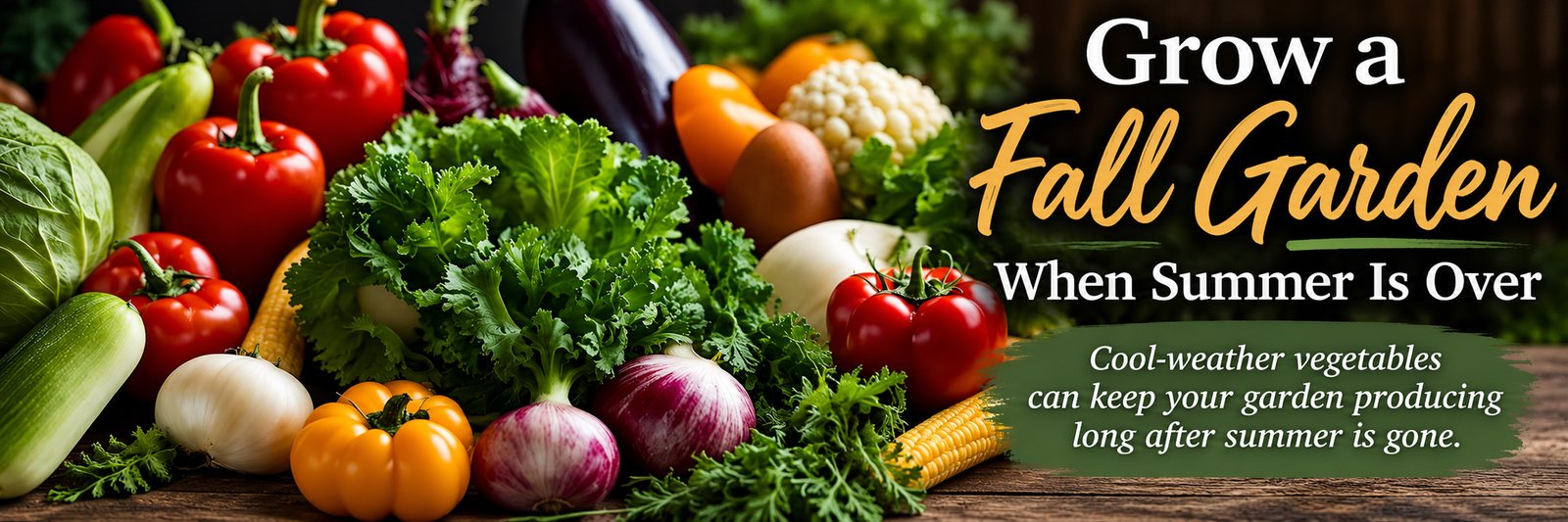
By the time September rolls around, the summer garden can look pretty tired. Tomato vines are slowing down, beans may be finished, and there are empty spaces where earlier crops have already been harvested.
But that doesn’t mean gardening season is over.
In fact, some vegetables grow better in the cooler days of fall than they do during the heat of summer. With a packet or two of seeds and a little planning, you may be able to keep fresh food coming from the garden for weeks—and sometimes months—after the summer garden has given up.
And you don’t need another garden to do it. Those empty spots you already have can go right back to work.
Why Grow a Fall Garden?
There are some real advantages to gardening after the hottest part of summer has passed.
Cooler temperatures are easier on many vegetables—and easier on the gardener. You may have fewer problems with some summer pests, and vegetables such as spinach, kale and collard greens thrive when the weather cools.
A fall garden can also be an inexpensive way to stretch the grocery budget.
You aren’t trying to grow everything you eat. Even a few rows of greens, lettuce, radishes or turnips mean something you don’t have to buy at the grocery store.
And when you’re trying to make every dollar count, a little bit here and a little bit there adds up.
Start With Your First Frost Date
Fall gardening is a little different from planting in spring.
Instead of asking, When is it warm enough to plant?, you’re asking:
How much growing time do I have left?
Find the average first-frost date for your area. Then look at the seed packet for the vegetable’s days to maturity.
If a radish takes about 30 days to mature and you have considerably more than 30 days before your usual first frost, you probably have time.
But don’t cut it too close. Plants grow more slowly as the days become shorter and temperatures drop. Give them some extra time whenever possible.
And remember that an average frost date is only an estimate. Mother Nature has never paid much attention to the calendar.
What Can You Grow in a Fall Garden?
This is where fall gardening gets interesting. Many vegetables don’t need—or even particularly like—the blazing heat of July.
Leafy Greens
Some of the easiest choices for a fall garden are greens:
- Lettuce
- Spinach
- Kale
- Mustard greens
- Collard greens
- Swiss chard
One of the nice things about leafy vegetables is that you often don’t have to wait for the whole plant to mature.
Harvest a few outer leaves for supper and leave the rest growing.
That’s about as close as you can get to keeping groceries stored in the backyard.
Radishes
If you’re getting a late start, don’t overlook radishes.
They’re inexpensive to grow, don’t require much room, and many varieties mature quickly.
Plant a small amount and then another short row a week or two later instead of planting the whole packet at once. That can spread your harvest out rather than giving you more radishes than you know what to do with on one Tuesday afternoon.
Turnips
Turnips are particularly useful because you can get two foods from one plant.
You can eat the greens and the root.
That’s a pretty good return from a packet of seeds.
Carrots and Beets
Carrots and beets can also be good fall crops if you have enough time before cold weather arrives.
They generally take longer than radishes, so check the variety and days to maturity before planting.
Broccoli, Cabbage and Similar Crops
Broccoli, cabbage and other cool-season vegetables can do well in fall, but timing becomes more important because they need longer to mature.
If you’re starting late, buying a few transplants may make more sense than starting them from seed.
Seeds or Plants?
You don’t need to buy trays full of plants to have a fall garden.
For lettuce, spinach, radishes, turnips, carrots and many greens, a packet of seeds may be all you need.
Seeds are especially economical when you’re planting a larger area.
But don’t automatically rule out transplants.
If it’s already getting late in the season and a local garden center has healthy broccoli, cabbage or kale plants, spending a few dollars on established plants can buy you several weeks of growing time.
Just don’t get carried away.
The point is to grow inexpensive food—not turn a $3 cabbage into a $14 gardening project.
Put the Summer Garden Back to Work
You don’t have to prepare an entirely new garden.
Start where something has already finished growing.
Pull out spent plants and weeds. Diseased plant material should generally be removed rather than left in the garden.
Loosen the soil and add some compost if you have it.
Then plant.
That bare spot where the beans grew can become spinach. The finished cucumber row can grow turnips. A container that held a summer plant can hold lettuce.
Use what you already have.
Don’t Spend a Fortune Growing a Fall Garden
A productive garden doesn’t require raised beds made from expensive lumber, decorative containers or a shed full of specialized equipment.
People grew food for generations without any of that.
Use the garden space you already have.
Reuse pots and containers when appropriate.
Save leftover seeds for another planting if they’ll store well.
Trade seeds with a neighbor.
Use homemade compost if you have it.
And if you only have room for a few plants, grow the vegetables your family will actually eat.
There’s no bargain in growing six rows of turnips if everybody in the house hates turnips.
Don’t Forget the Water
September may feel cooler, but newly planted seeds still need moisture.
The top layer of soil can dry surprisingly quickly, especially during a warm spell.
Seeds need consistent moisture while they’re germinating. Once plants are established, continue checking the soil rather than assuming cooler weather means they don’t need water.
A gentle watering is better for newly planted seeds than blasting the row with a hose and washing everything away.
A Little Protection Can Extend the Season
Eventually, a cold night is going to arrive.
That doesn’t necessarily mean everything in the garden is finished.
Some cool-weather vegetables tolerate light frost better than summer vegetables do. Others can benefit from temporary protection on particularly cold nights.
A frost cloth is useful if you already own one, but you don’t necessarily need to buy something special.
An old sheet can provide temporary protection for some plants overnight. Support it when necessary so it isn’t crushing tender plants, and remove it after temperatures warm the following morning.
Don’t use a heavy covering that could damage the plants, and be careful with plastic resting directly against foliage.
Sometimes protecting the garden through one unusually cold night can give you several more weeks of growing weather.
Harvest a Little at a Time
One of my favorite things about a fall garden is that some of it can stay right where it is until you’re ready to eat it.
With many leafy vegetables, take the mature outer leaves and allow the center of the plant to continue growing.
Instead of harvesting everything at once, pick what you need.
A handful of spinach for a meal.
Some lettuce for sandwiches.
A few collard leaves.
A couple of turnips.
There’s less waste, and the rest stays fresh because it’s still growing.
When Winter Finally Wins
Eventually, winter will win. It always does.
When your garden is finished, remove unhealthy plant material and weeds. Healthy garden debris can be composted when appropriate.
Then make yourself a few notes.
What grew well?
What did your family actually eat?
What did you plant too late?
What would you plant more of next year?
Those few notes can save both time and money when next fall comes around.
You Don’t Need a Big Garden to Make a Difference
A fall garden doesn’t have to feed your family for the entire winter to be worthwhile.
Maybe you grow enough lettuce that you don’t buy it for a month.
Maybe you’ve got fresh greens for several Sunday dinners.
Maybe a $2 packet of turnip seeds produces far more than $2 worth of food.
It all counts.
Many people enjoy our article about how to stretch your groceries.
Mountain Heart Ministries
Hope for Today • Help for Tomorrow • Faith for the Journey
Helping our Appalachian neighbors one life, one family,
and one community at a time.
Contact
info@mountainheartministries.org
Serving mountain communities in Eastern Kentucky
and Northeast Tennessee.
“My little children, let us not love in word, neither in tongue;
but in deed and in truth.”
1 John 3:18 (KJV)
© 2026 Mountain Heart Ministries. All Rights Reserved.
Mountain Heart Ministries is a Christian nonprofit organization
dedicated to serving individuals and families with compassion,
dignity, and hope.